Designing an E-Learning and Assessment Platform for the Maritime Industry
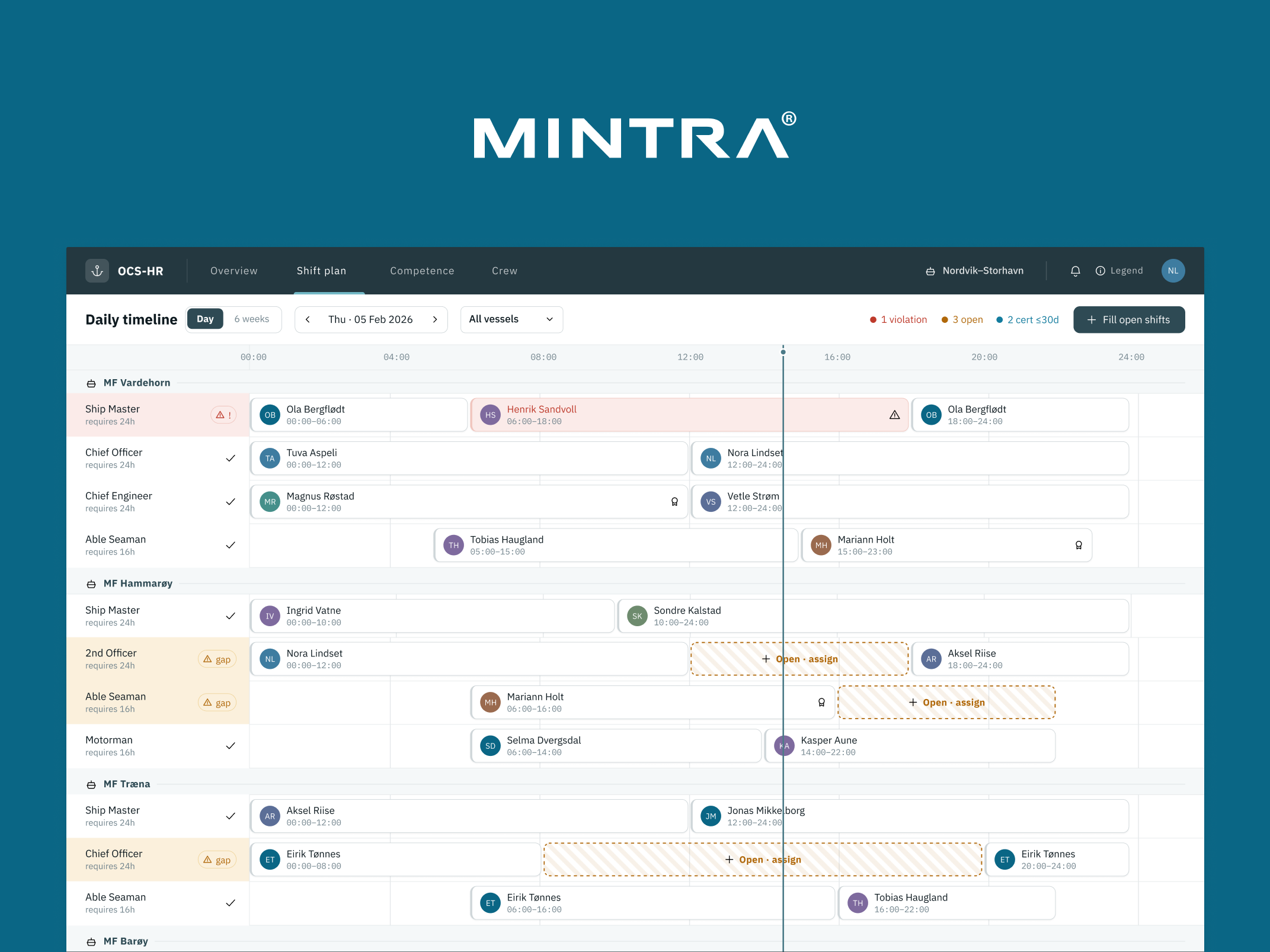
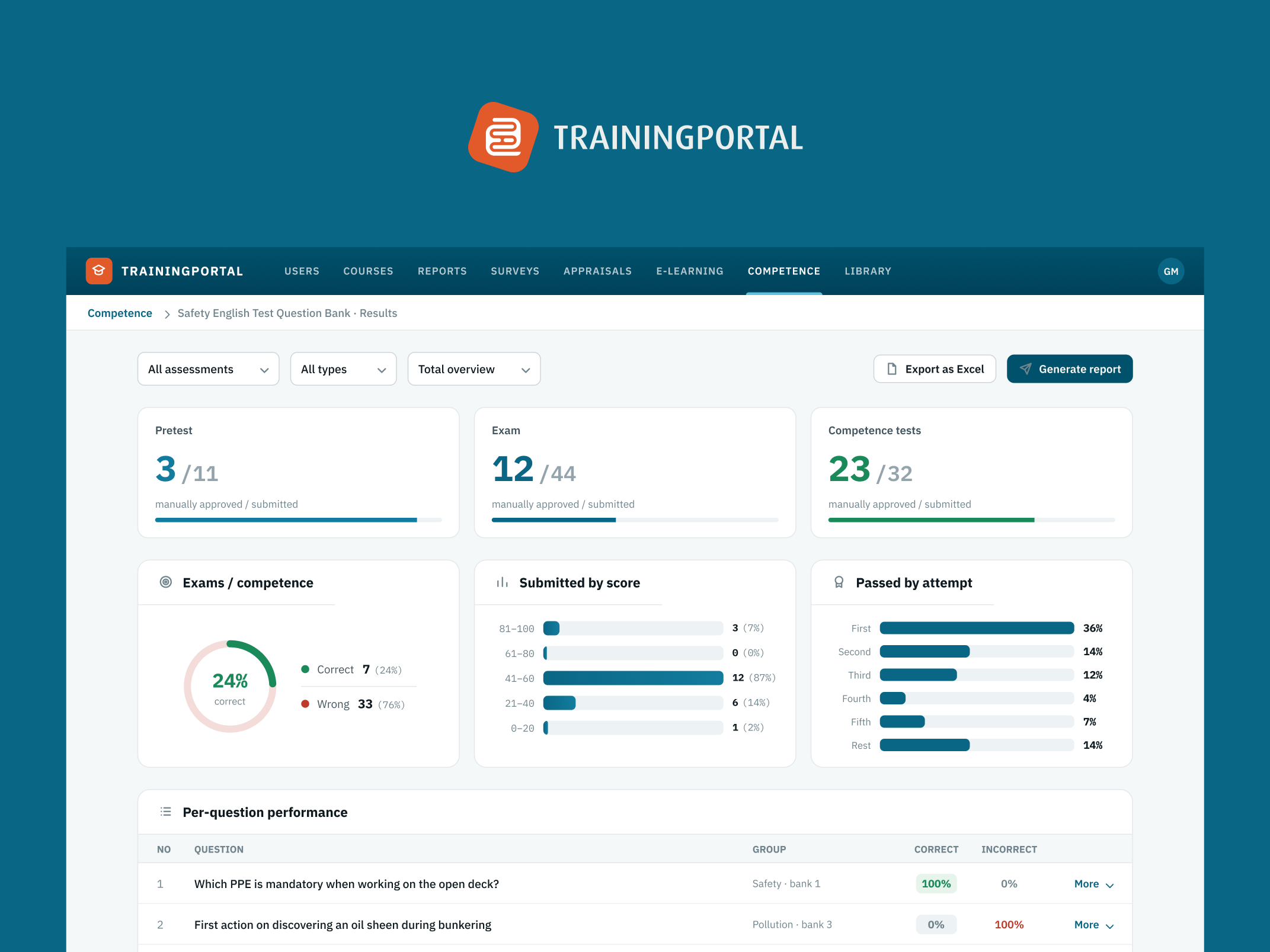
Mintra’s Training Portal is an online learning and assessment platform used by shipping and energy companies to manage crew training — from basic safety courses through to formal exams with real regulatory consequences. Crew members who don’t pass required certifications can’t sail. The platform has to be reliable, clear, and built around the real complexity of how maritime training works.
The full system was redesigned, with several new features designed from scratch.
Overview
- 01
The problem
Crew members who don't pass required certifications can't sail. The Training Portal runs formal exams with real regulatory consequences, so it has to be reliable and clear.
- 02
What I did
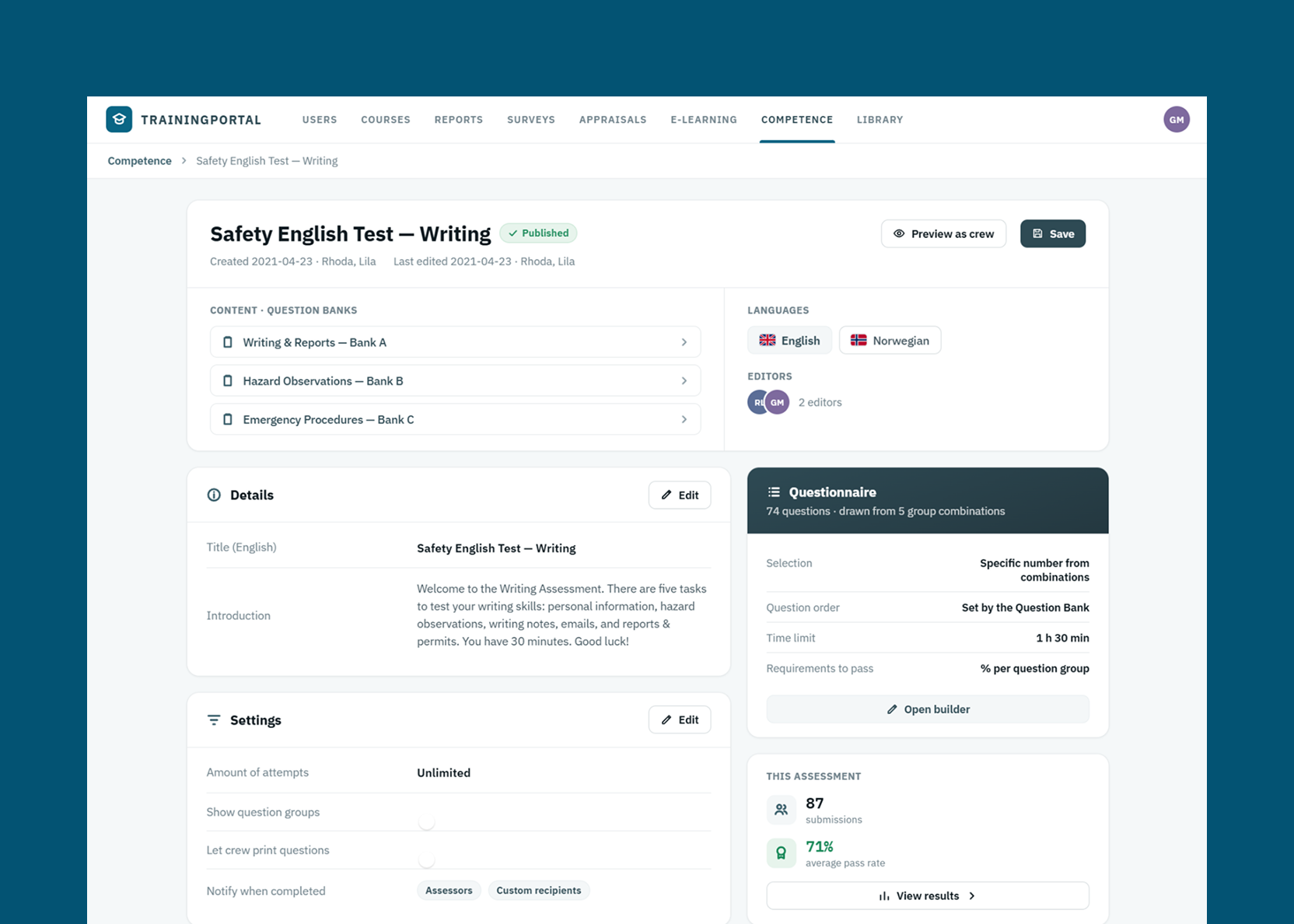
Redesigned the full system and designed the question bank, exam builder, Crew Evaluation Test, proctoring system, course reporting, and student test interface.
- 03
The results
A platform that handles the full complexity of crew training management in one consistent interface.
Mapping states before touching the design
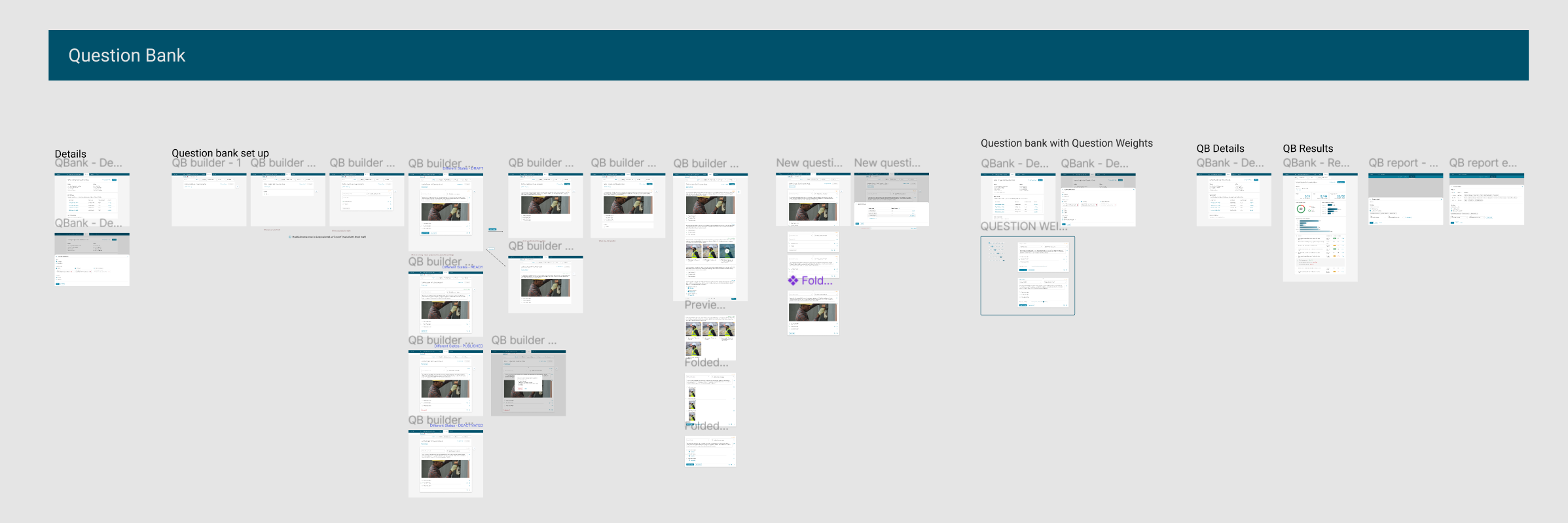
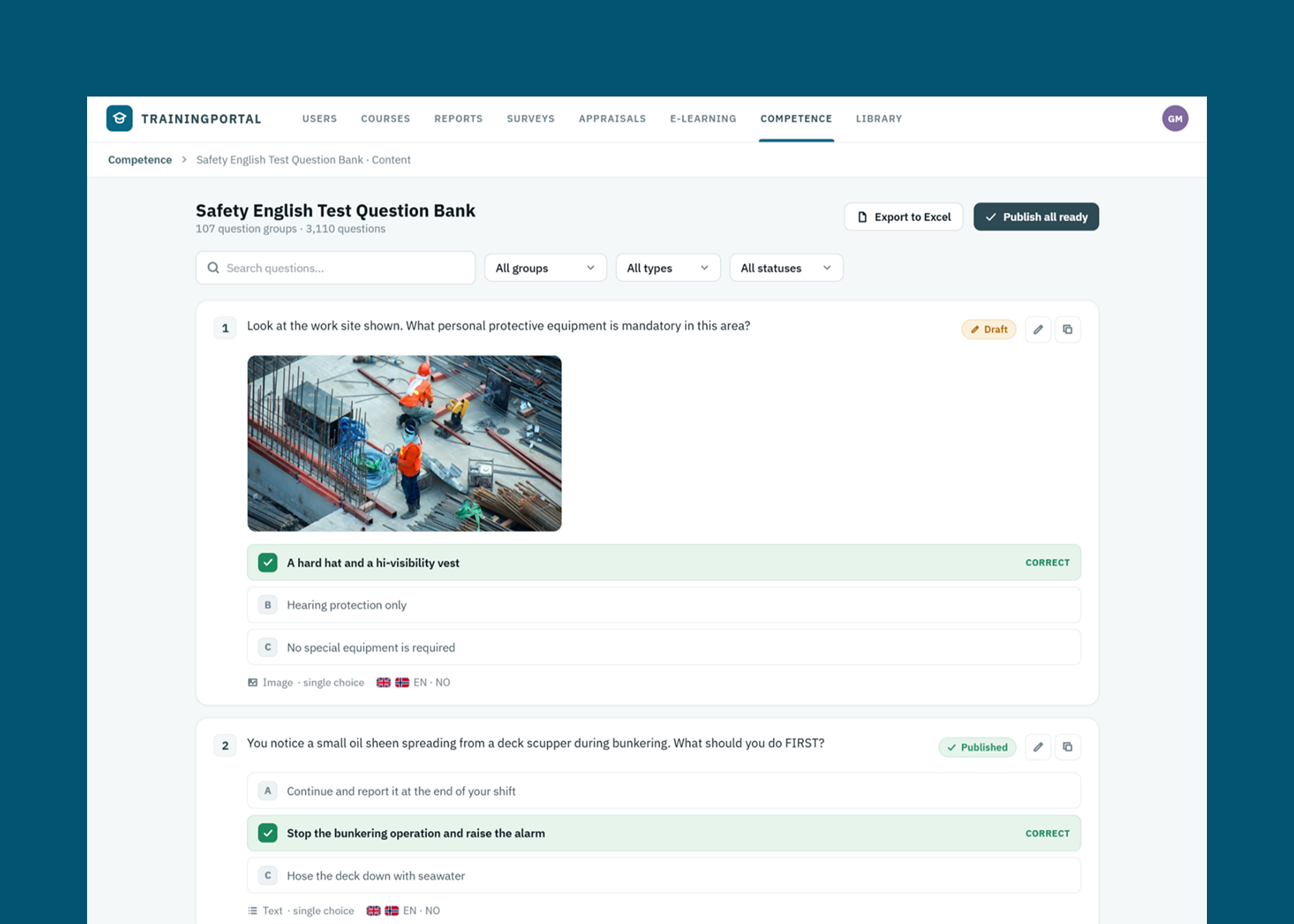
The question bank alone had enough complexity to justify a dedicated mapping phase before any design work started. Questions aren’t just content — each has a type, a language version, a difficulty weighting, a lifecycle state (draft, published, deactivated, archived), and links to specific competence requirements. Moving a question between states follows rules. Reinstating a deactivated question has its own flow. Breaking any of this creates problems downstream in exams and reporting.
Every state, every rule, and every transition was mapped before drawing a single screen. Mapping every system before designing it avoided the retrofitting that happens when edge cases surface during testing.
The systems designed
Question bank management
The question bank was redesigned with clear visual states so administrators could see at a glance what was draft, published, deactivated, or flagged for review — without opening each record individually. Filtering, sorting, and searching were redesigned to work across libraries of hundreds or thousands of questions spanning multiple languages and subject areas. Bulk actions (publishing a set of questions, archiving outdated content) were given clear confirmation flows to reduce the risk of accidental changes at scale.
Assessment and questionnaire builder — three drawing modes
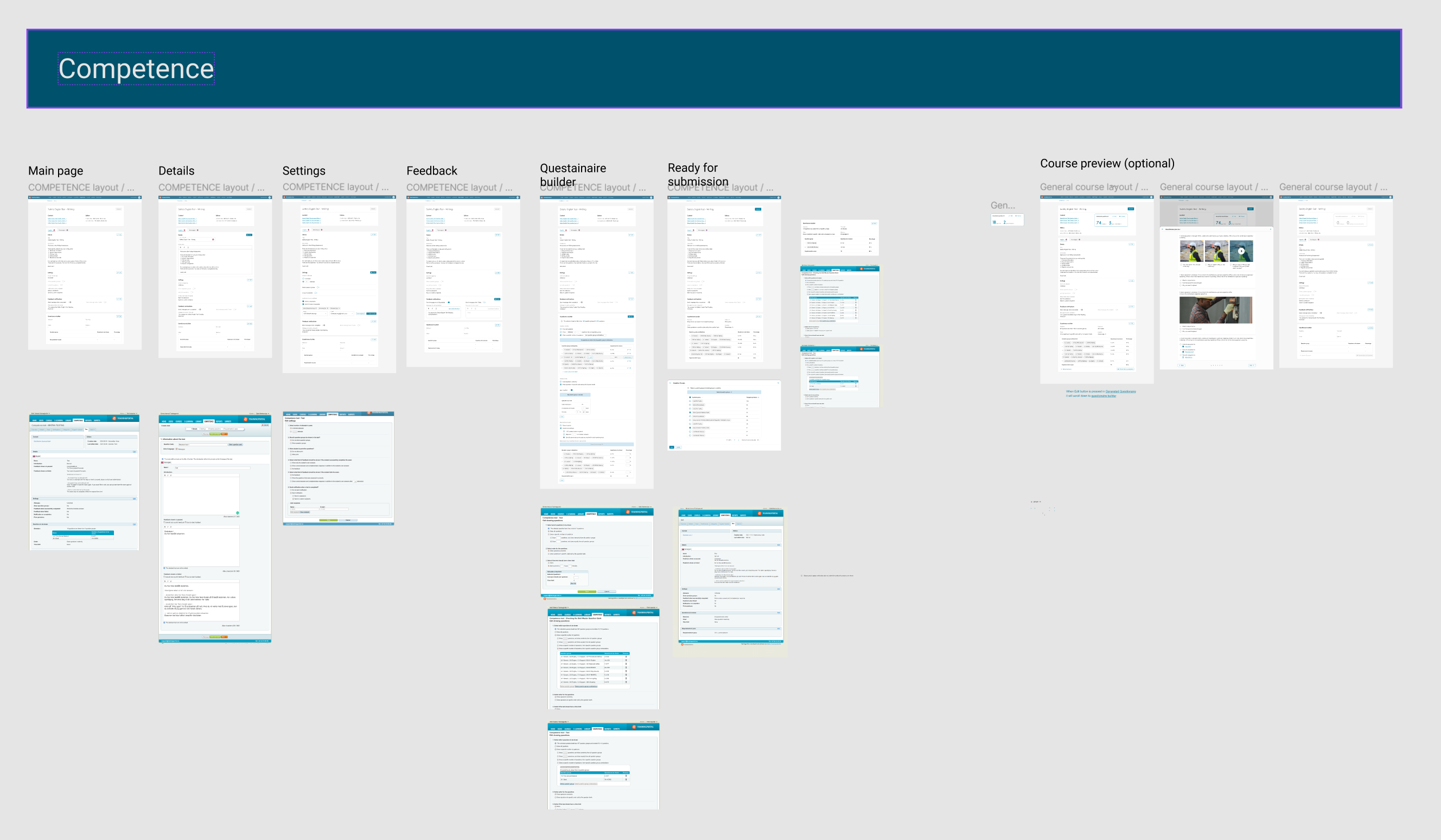
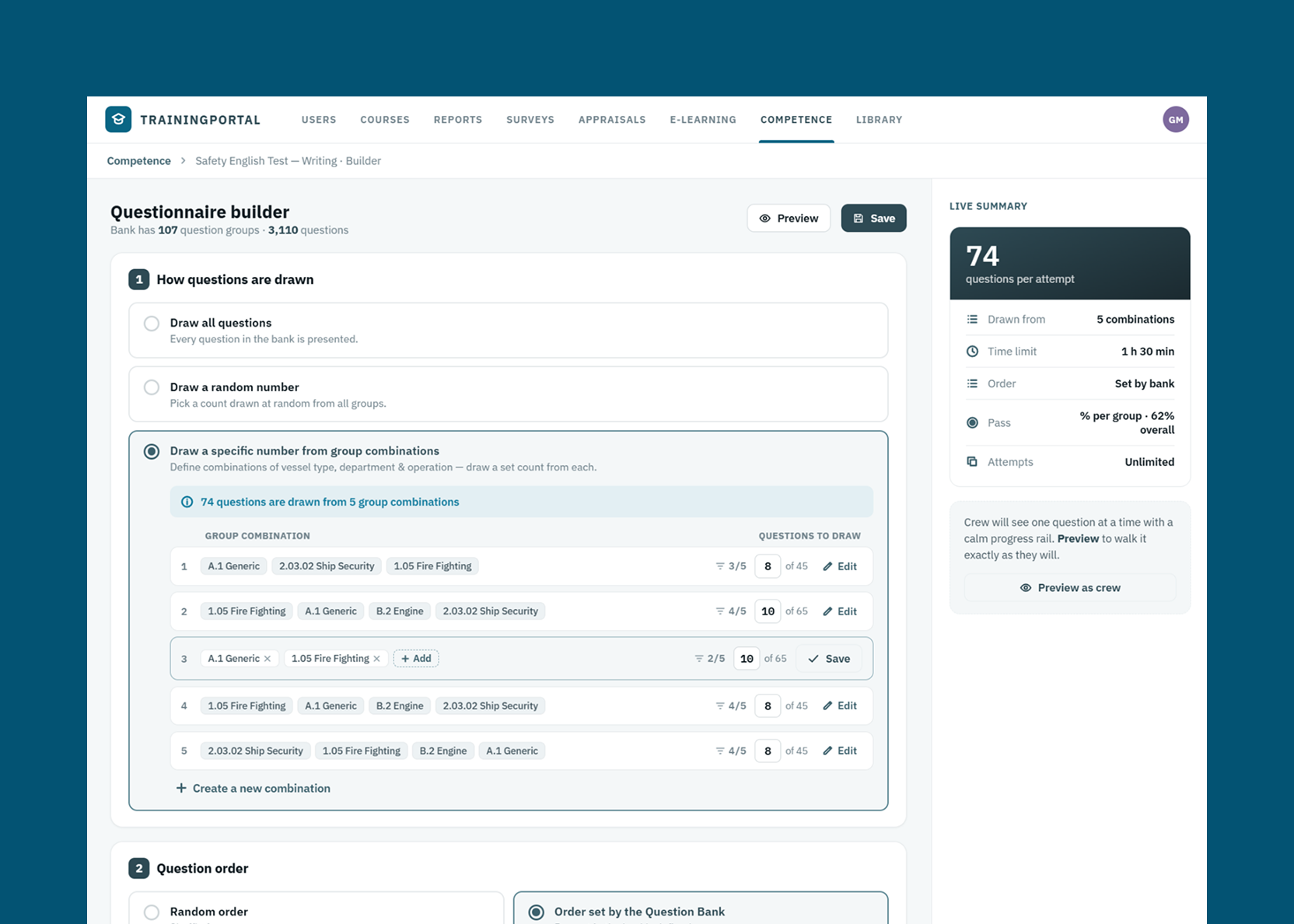
Exams on the Training Portal are configurable assessments with specific drawing rules determining which questions appear. The exam builder was designed around three drawing modes:
- Draw all — every question in the selected bank appears in the exam
- Draw randomly — a specified number drawn at random from the bank on each attempt, so no two sittings are identical
- Draw by group — questions drawn from specific sub-groups within the bank, with rules per group — useful for tests that must cover multiple competency areas simultaneously
Admins can preview the question composition before publishing — seeing exactly which questions will appear (or the distribution logic if random) to verify the exam makes sense before it goes live.
Crew Evaluation Test (CES) builder
The CES evaluates crew members against their specific role requirements. Unlike a standard exam, a CES is configured based on vessel type, crew member department, and operational role — so a chief engineer on a tanker gets a different question set than a deckhand on a ferry. The CES builder was designed so admins could configure these combinations without the complexity overwhelming the screen.
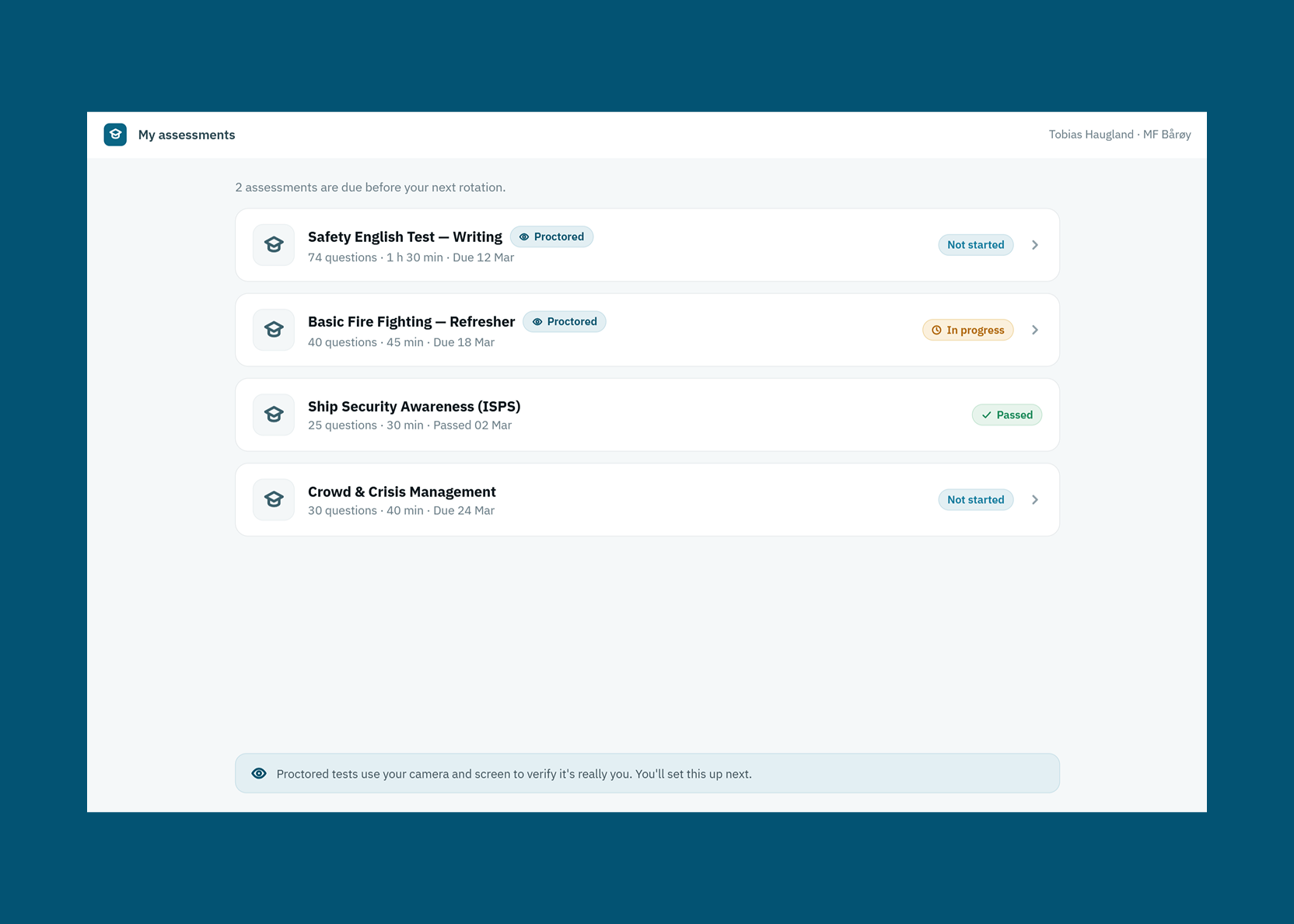
Proctoring and exam authentication
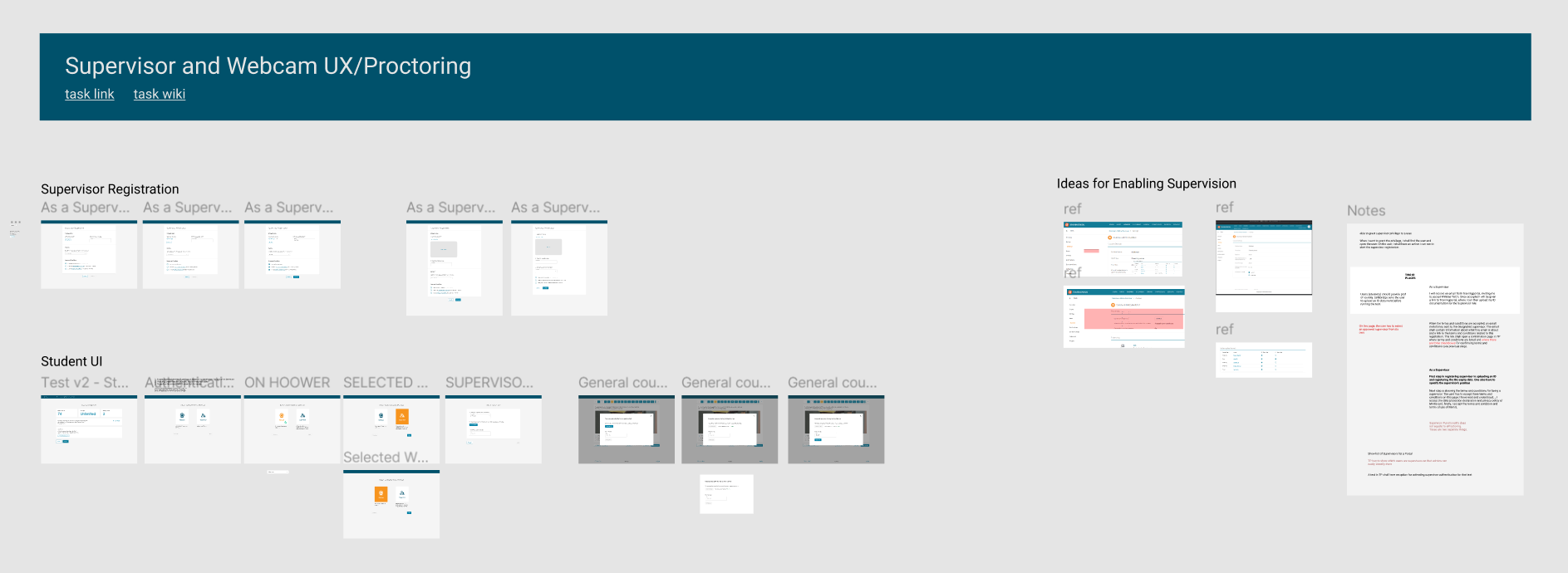
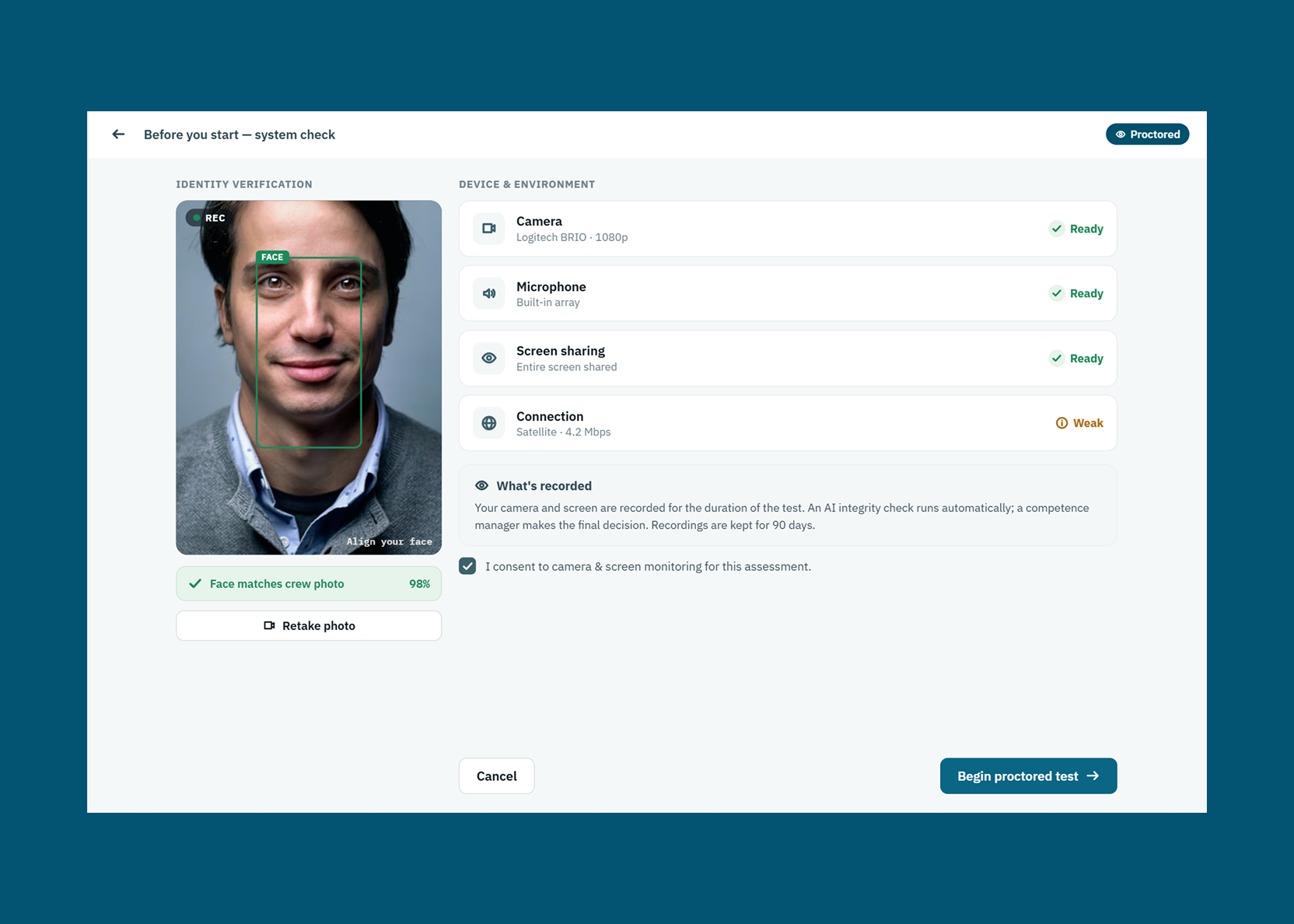
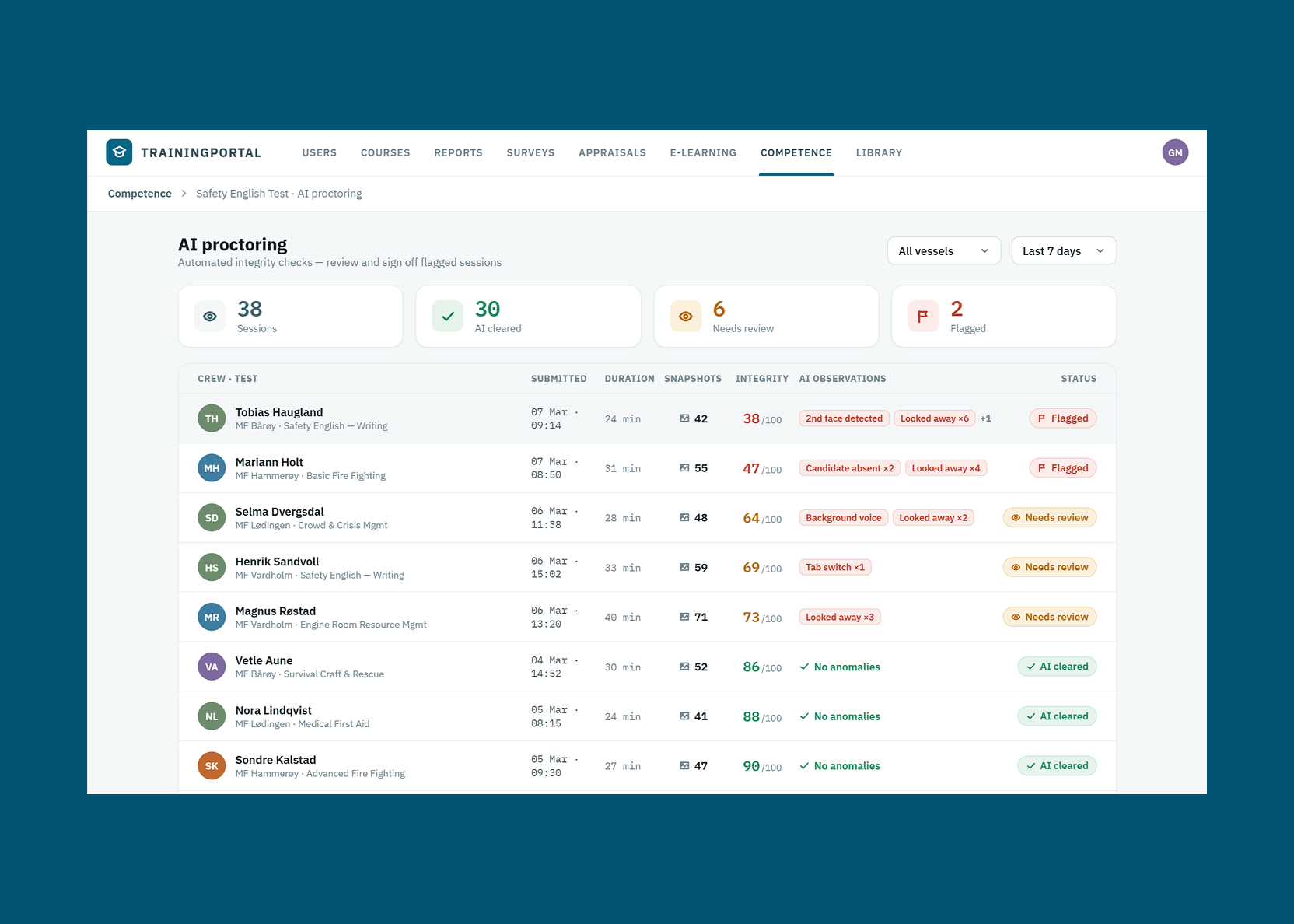
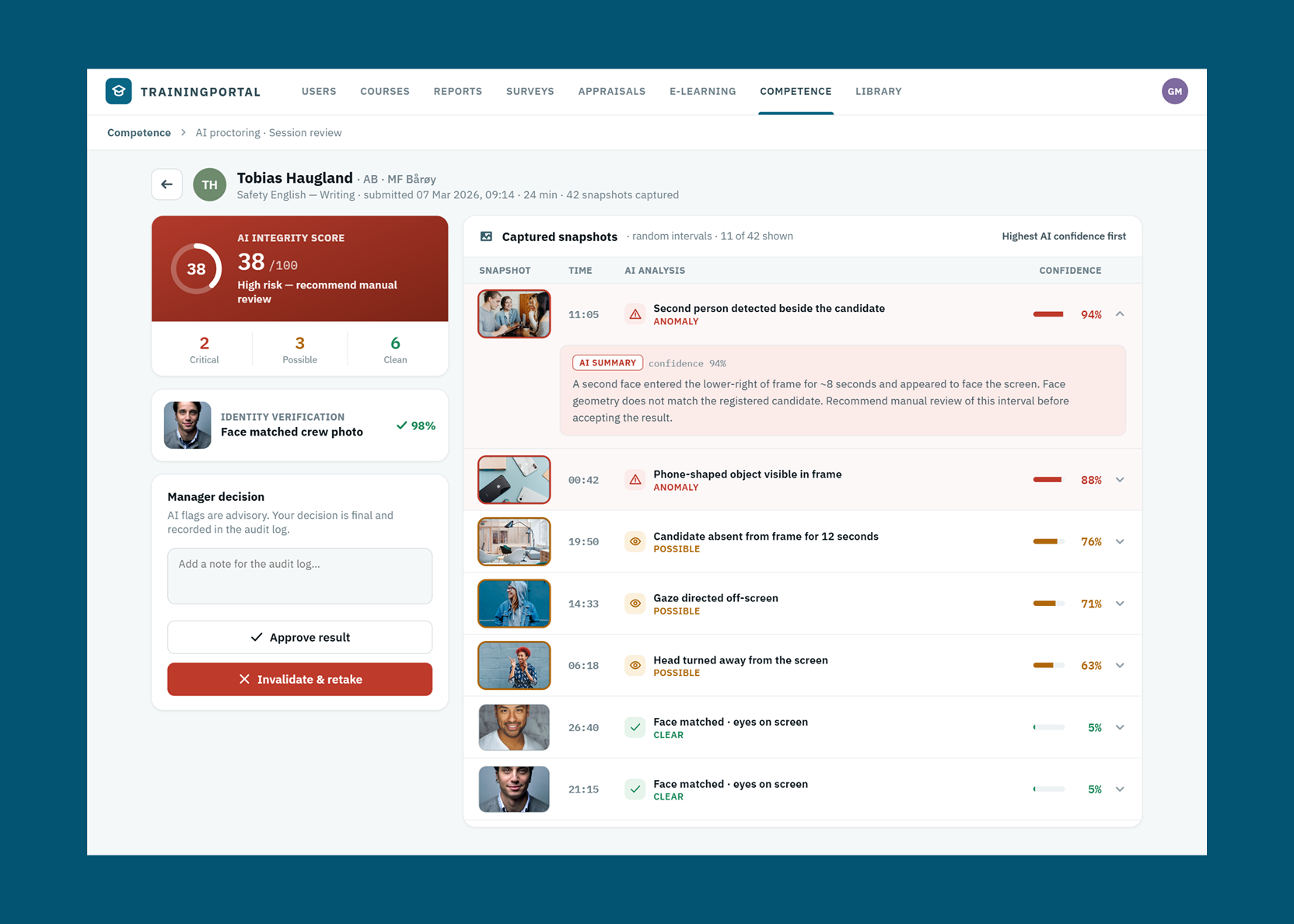
For high-stakes certifications, maritime training requires verified, supervised exams. Two proctoring modes were designed:
- Supervisor proctoring — a registered supervisor physically present with the candidate, authenticated through the system before the exam begins
- Webcam proctoring — remote identity verification with session recording and an admin review queue for flagged sessions
The design challenge: proctoring creates friction by design. The identity verification steps need to be thorough enough to be meaningful, but clear enough that they don’t delay a candidate who is ready to sit. The supervisor flow and the webcam flow were mapped in parallel to keep the overall experience consistent while the verification methods diverged.
Student test-taking experience
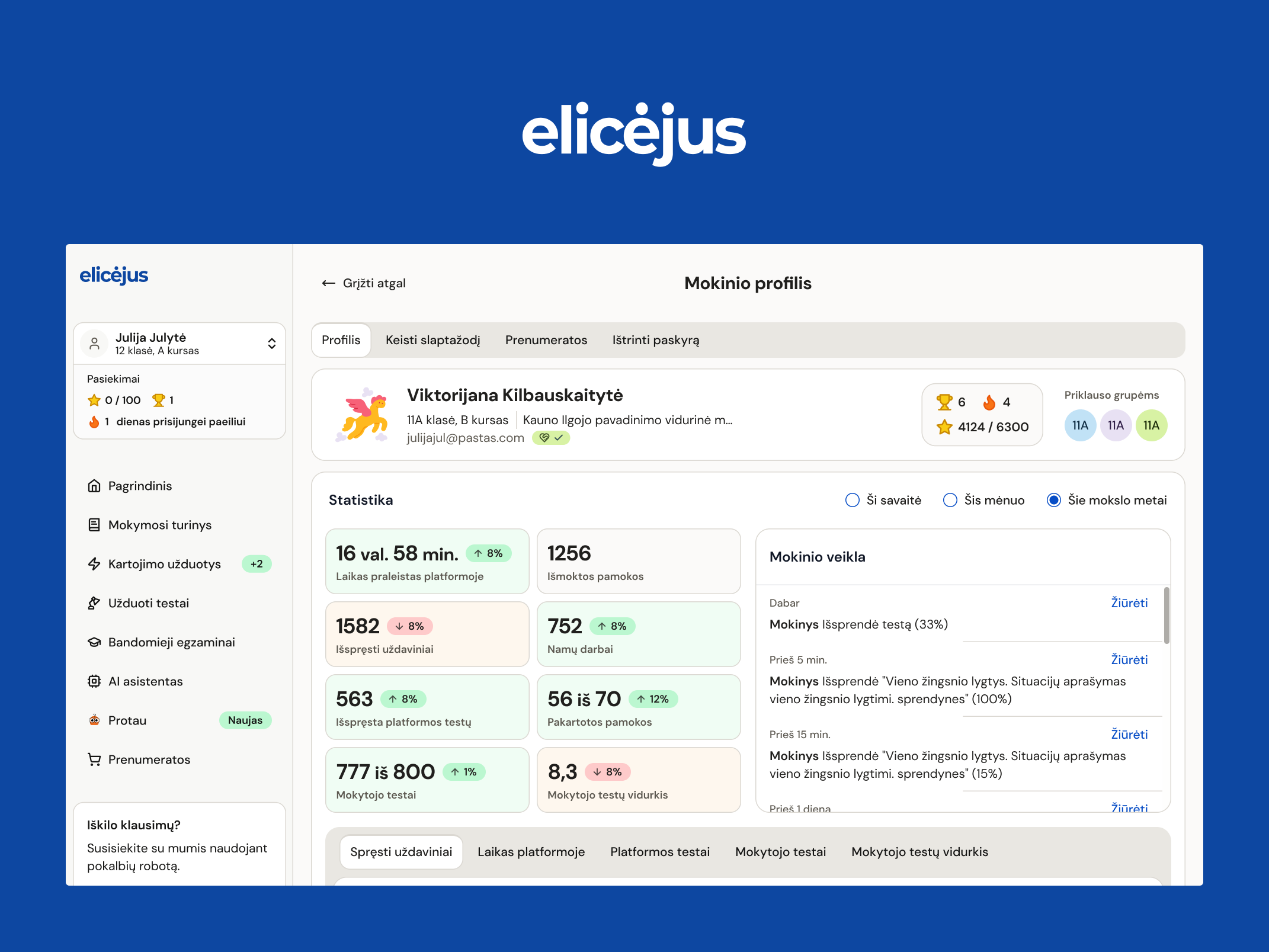
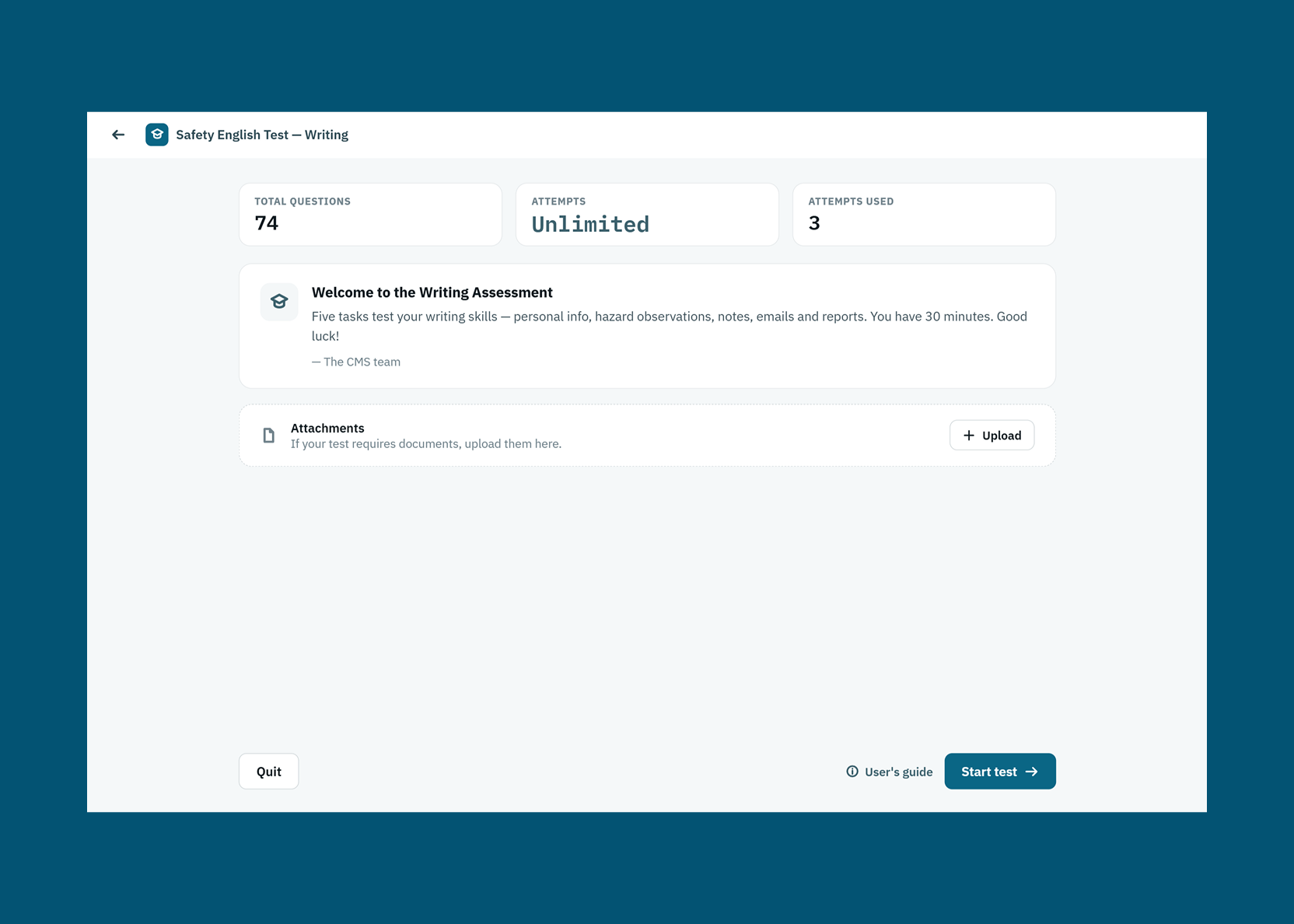
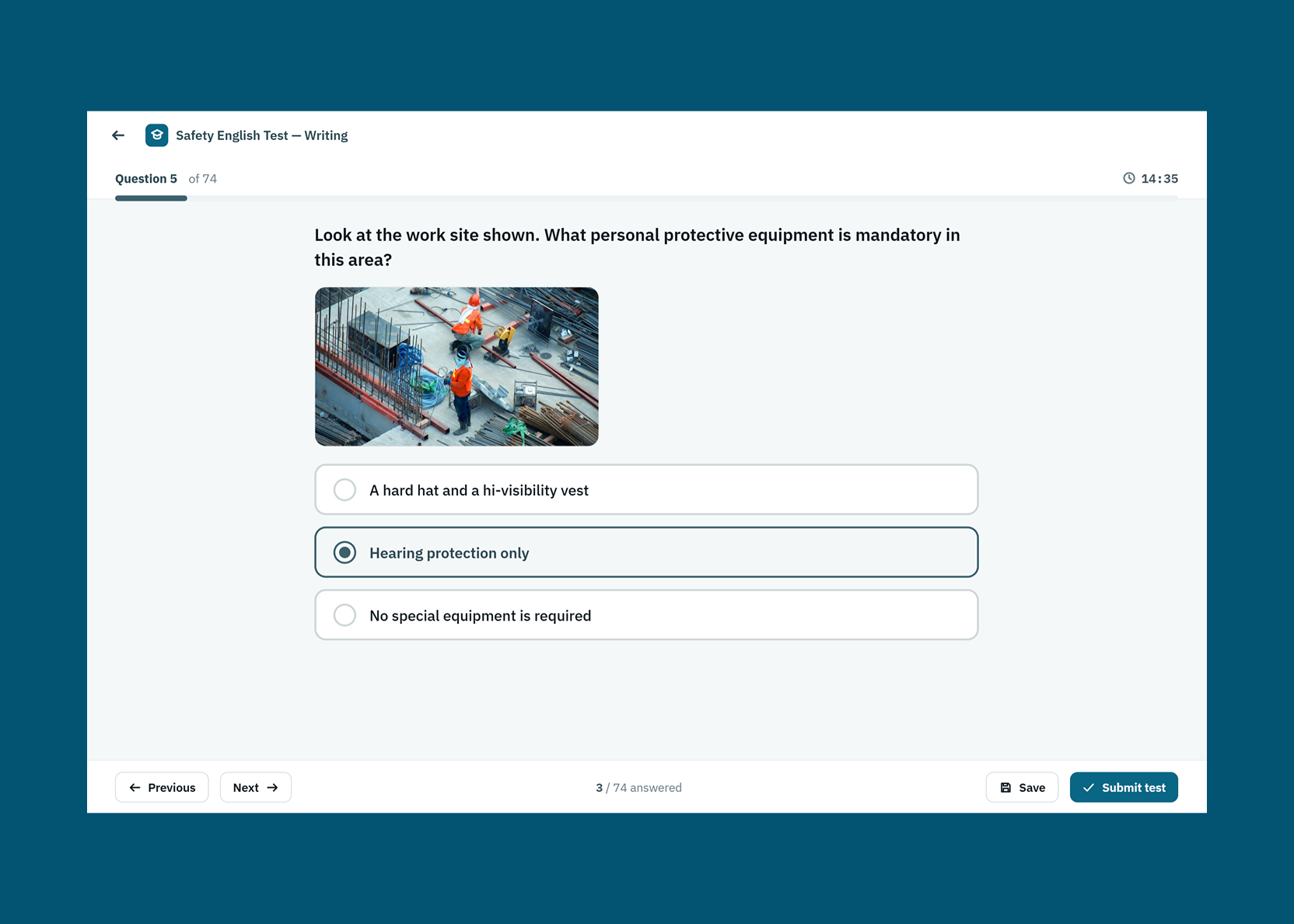
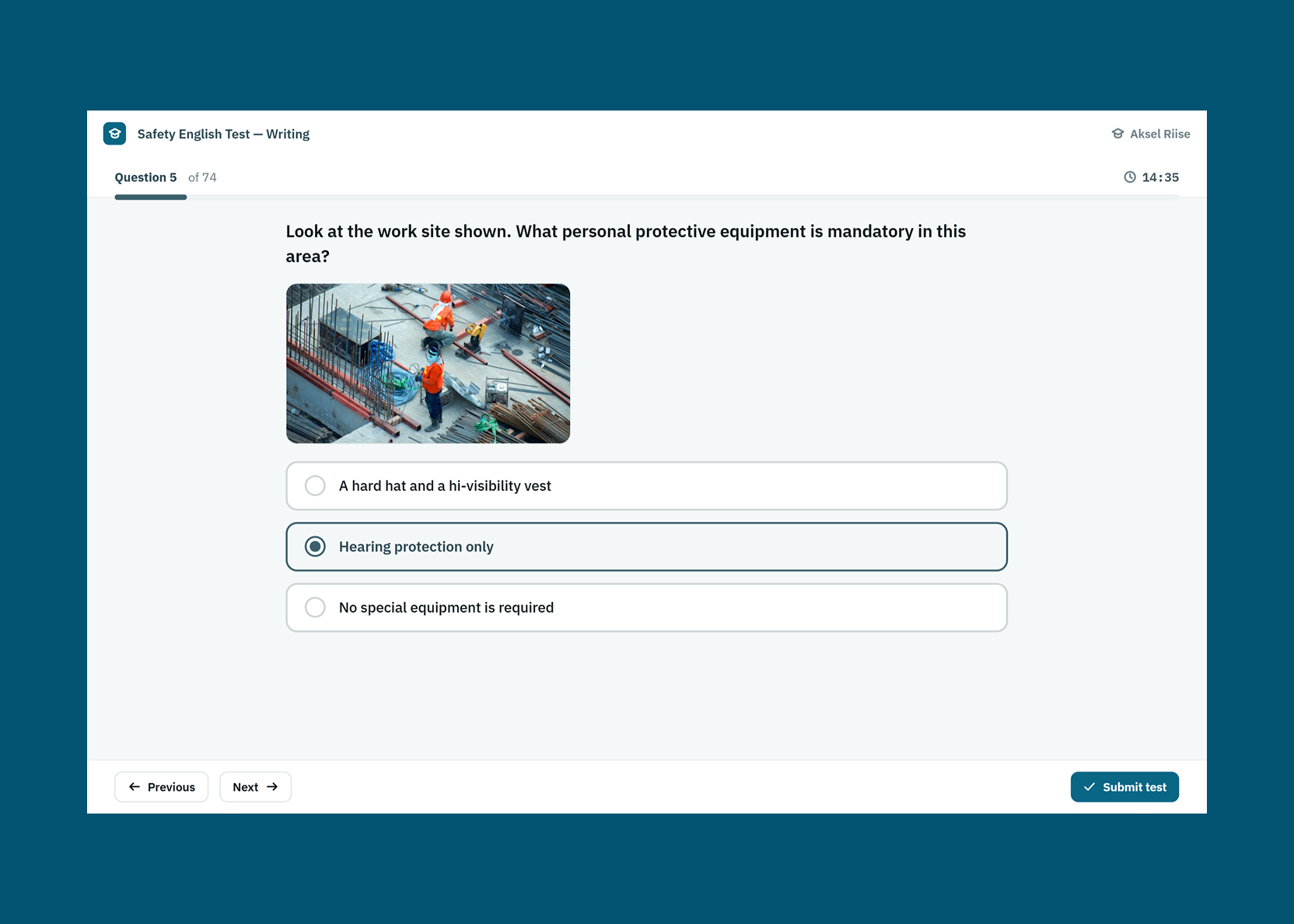
The learner-facing test screen was designed with one priority: nothing should distract from the exam itself. Clear progress strip across the top. Timer visible but not anxiety-inducing. Save-and-return functionality for longer exams. Navigation between questions without losing work. Works across device types, since crew members may sit exams on shared terminals with varying screen sizes.
Course reporting
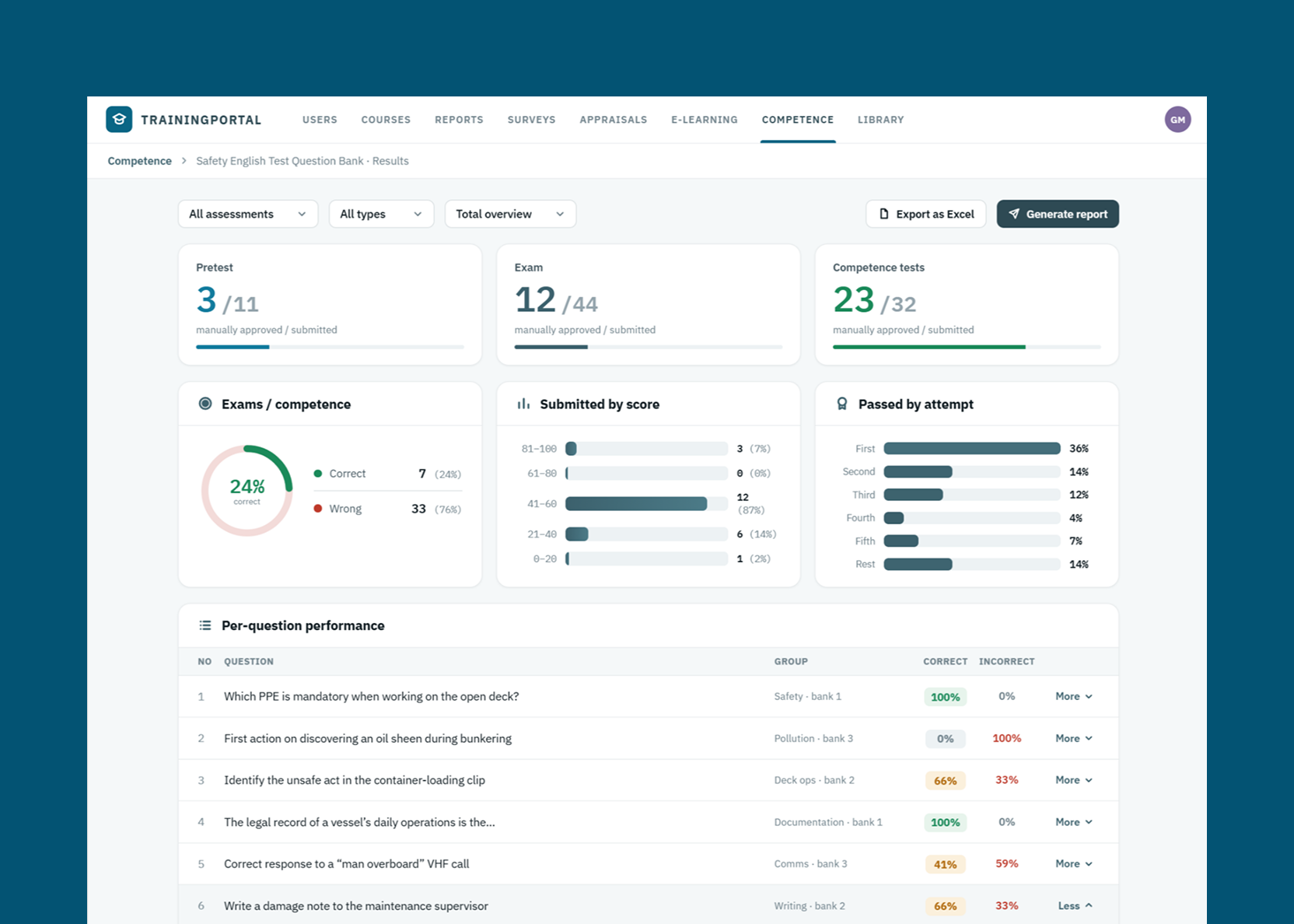
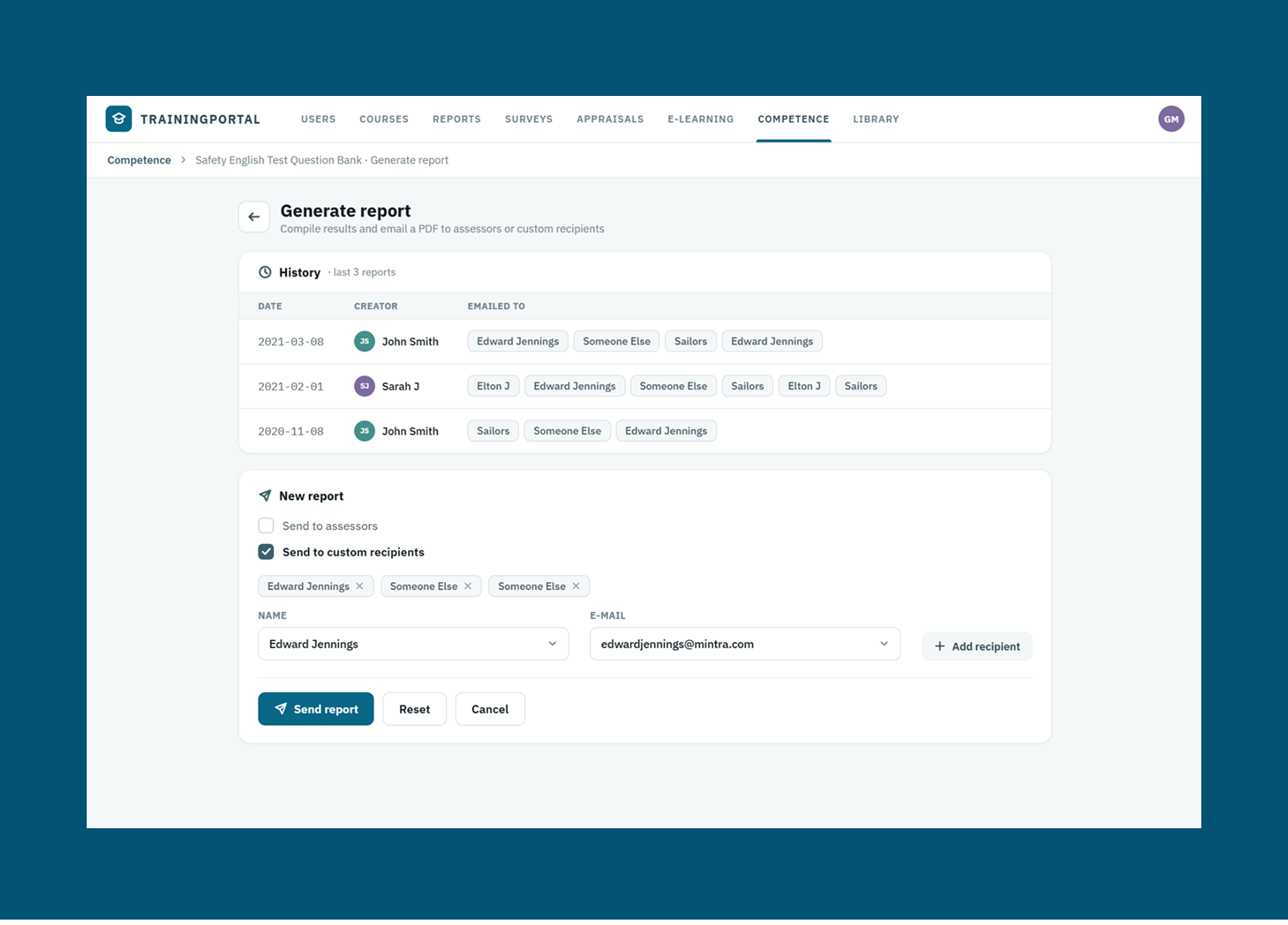
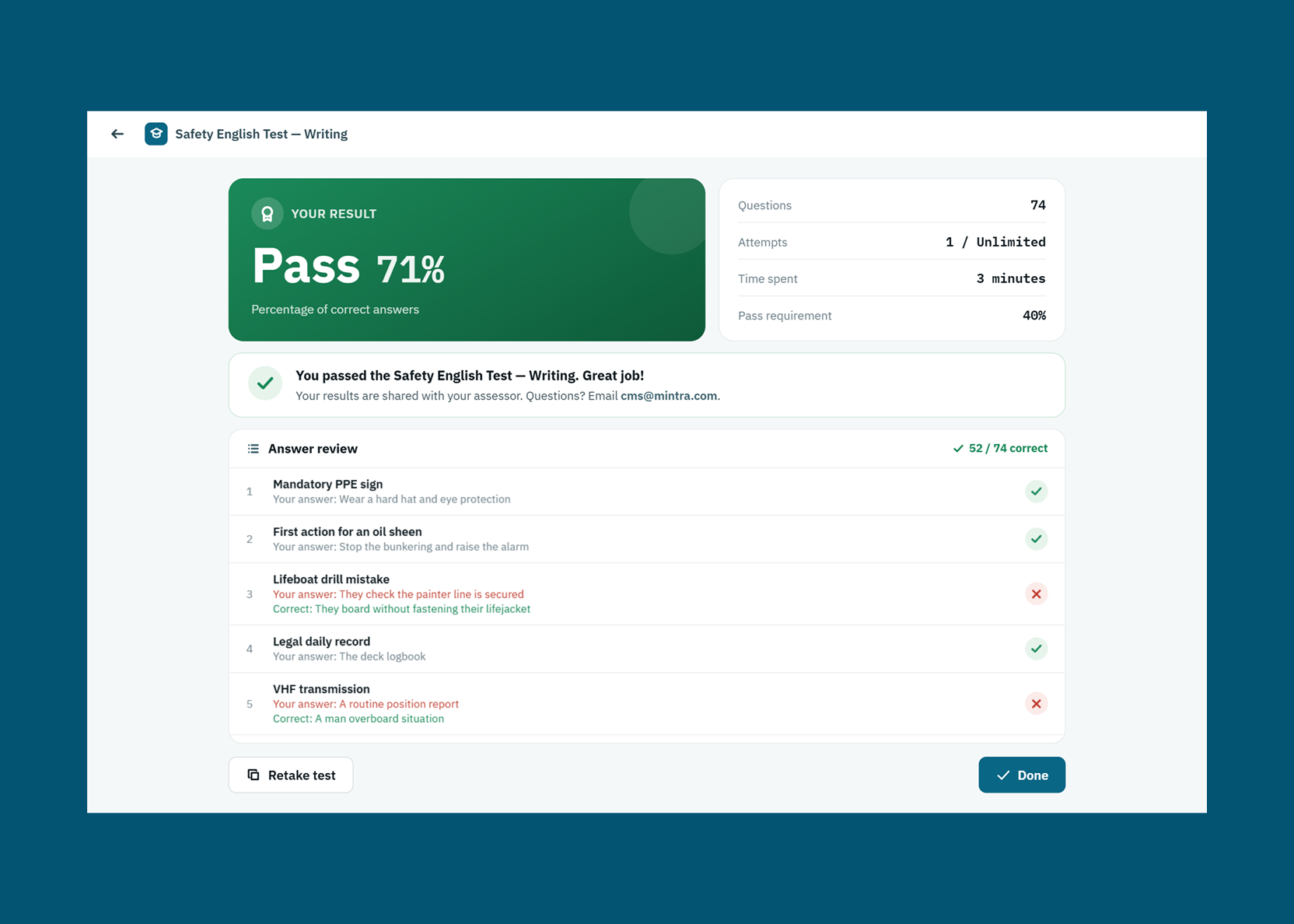
The reporting module gives administrators visibility into how courses and assessments are performing — not just individual results, but aggregate data that supports both operational and commercial decisions:
- Pass and failure rates by course — identifying question banks or courses producing low pass rates, signalling content that needs revision or difficulty adjustment
- Learner performance over time — tracking whether individuals or groups improve across repeat attempts
- Commercial insight — Mintra’s business model is built around configurable course libraries sold as standalone products. Performance data identifies which courses are strong enough to sell individually and which need development before going to market.
Why the methodology mattered
Maritime training compliance has real consequences — for crew members who need their certifications, for companies that need compliant rosters, and for regulators who audit both. A poorly designed question bank leads to bad data. A proctoring flow with ambiguity leads to disputed results. The result is a platform that handles the full complexity of crew training management in one consistent interface.
Client feedback